Why Hotels Run Multiple Brands in the Same City | Design, Pricing & Operating Logic
Why does the same hotel brand operate multiple properties in...
Thane is witnessing a unique convergence of cultural celebrations and economic momentum, The festive spirit, coupled with attractive offers and government incentives, is making it an ideal time to invest in a dream home. As the city celebrates Gudi Padwa and Eid, we're seeing a surge in inquiries and site visits. It's an opportune moment to invest in Thane's future, and we're committed to guiding homebuyers every step of the way,
As Gudi Padwa and Eid converge in 2026, Thane's real estate market is abuzz with festive fervor. The city's growth story, fueled by infrastructure development and economic opportunities, is driving homebuyer interest. The Thane Metro, Coastal Road, and other projects are transforming the city's landscape, making it an attractive destination for homebuyers. With homes ranging from 40 lakh to 8 crore, Thane offers options for every budget,
The Atal Setu bridge is more than an infrastructure project it is a structural shift in how Navi Mumbai and Panvel integrate with Mumbai's economic core. By significantly reducing travel time to South Mumbai and key business districts, it has enhanced daily convenience and reshaped buyer perception. Connectivity builds confidence, and confidence drives real estate.
We are already witnessing stronger end-user interest and investor traction in Panvel and emerging nodes of Navi Mumbai, as improved accessibility directly translates into long-term value creation. Infrastructure-led growth has historically defined Mumbai's expansion, and Atal Setu is accelerating that trajectory.
For homebuyers, it means better work-life balance and future-ready locations. For investors, it signals sustained appreciation backed by tangible connectivity, not just speculation.
The Atal Setu has effectively redrawn Mumbai's map. Mumbai has traditionally grown northwards because of its island shape, but now a whole new direction of growth has opened up. Historically, we've seen whenever new connectivity opens up, real estate gets a huge boost - look at Brooklyn after the Brooklyn bridge for instance. What's also interesting is that if you map out all locations that are 40 minutes away from South Mumbai, Panvel has by far the lowest property prices. So the Atal Setu is bound to result in stronger residential demand and long-term value appreciation in Panvel and Navi Mumbai.
Mr. Samyag M. Shah, Director of Marathon Nextgen Realty Ltd, CREDAI - MCHI Youth wing Convenor
The impact of Atal Setu is showing up less in headlines and more in buyer
behaviour across Panvel and Navi Mumbai.
What were once considered peripheral markets are now seeing stronger end-user enquiries and more committed investor participation. Shorter commute times have expanded the practical catchment for homebuyers priced out of central Mumbai, while improved accessibility has reduced the perceived risk for investors. That combination is important.
We're already seeing longer holding horizons, increased interest in mid-to-premium residential formats, and growing appetite from developers looking to build at scale.
Connectivity has shifted these markets from speculative plays to liveable, investable ecosystems.
This is how infrastructure quietly reshapes real estate cycles.
Mr. Sanjay Daga, CEO and Managing Director of Anex Advisory
Why Hotels Run Multiple Brands in the Same City | Design, Pricing & Operating Logic
Why does the same hotel brand operate multiple properties in...
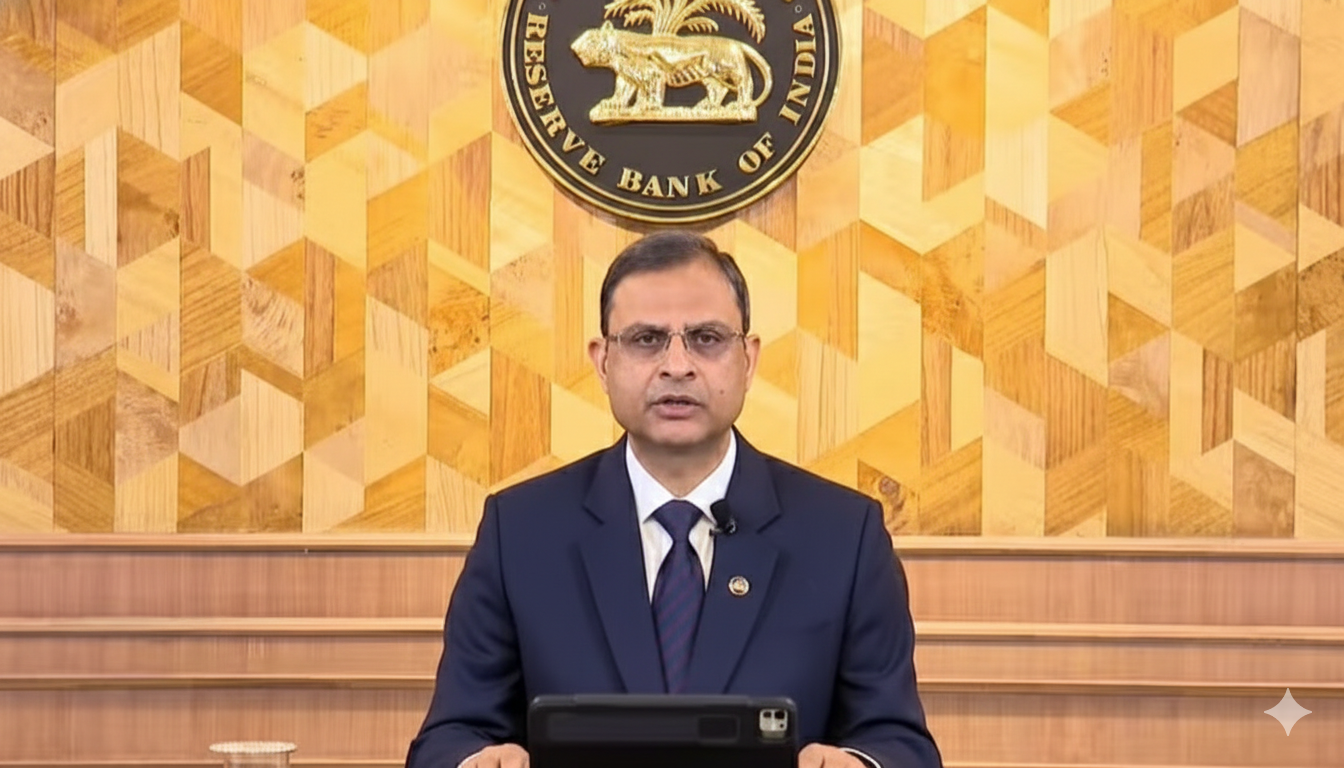
The RBI's choice to maintain the repo rate at 5.25% and adopt a neutral stance brings a sense of predictability to the real estate sector, which is more crucial than any minor rate cuts at this point. With over 100 basis points of cumulative rate reductions already in play and lending rates dropping by nearly 90-100 bps, mortgage affordability has mostly stabilized for mid-income and premium buyers, who are still driving demand. For developers like us, a stable rate environment makes it easier to manage funding costs and enhances cash-flow visibility, particularly for projects that are already underway. While credit from banks and NBFCs remains supportive, capital is becoming more selective, favoring those well-capitalized players. Affordable housing continues to face challenges, as rising costs and slower income growth lessen the benefits of stable EMIs. The neutral stance keeps future options open, allowing both buyers and developers to plan without the worry of policy uncertainty
RBI's decision to hold rates signals a preference to watch inflation, liquidity, and transmission before moving further. Most of the easing done so far has already flowed into retail lending, which is why home loan rates remain relatively competitive despite the pause. Affordability continues to be supported by stable spreads, lender competition, and selective concessions. Borrowers can still optimise costs by keeping EMIs higher to shorten loan tenures and reduce interest outgo, while balance transfers remain relevant for incremental savings. On the savings side, a steady repo rate means fixed deposit rates are likely to stabilise, with fewer sharp hikes ahead. Higher FD rates are becoming more selective, and most mainstream offers are settling into a narrower band. Investors looking to lock in current yields may consider spreading deposits across tenures, while senior citizen rates continue to offer a small but meaningful edge.
The RBI's decision to hold the repo rate steady at 5.25% offers stability for interest-rate sensitive sectors like real estate in the current macroeconomic environment. With inflation remaining at manageable levels and the benefits of earlier rate cuts continuing to flow through to homebuyers in the form of improved affordability, residential demand has remained resilient. The Union government's decision to raise public capital expenditure to 12.2 lakh crore in FY27, as announced in the Union Budget 2026, further strengthens the growth outlook through infrastructure-led development.
Supported by stable monetary policy and sustained public spending, the real estate sector will continue to play a pivotal role in driving economic growth, employment generation, and urban development across the country.
Mr. Pradeep Aggarwal, Founder & Chairman, Signature Global (India) Ltd.
The Union Budget 2026 certainly charts a forward-looking roadmap for India's and especially Hyderabad's real estate industry. While high speed rail connectivity across key growth corridors (announced in the budget) will clearly strengthen Hyderabad's realty, the extended tax holiday till 2047 for foreign companies establishing cloud service data centres in India will likely have significant and positive impact on the city's realty developers, home buyers, and residents as well.
Major companies with data centers in Hyderabad already include global technology giants, Amazon Web Services (AWS), Microsoft Azure, and Google Cloud, alongside major colocation providers, such as CtrlS, and NTT. Considering that the tax holiday would mean over 20 years of tax-free operations for global cloud businesses, this will attract many more global companies to Hyderabad. This surge will likely drive ancillary demand for high-quality housing and integrated urban ecosystems.
At GHR Infra, we see this as additional cushion that will aid Hyderabad's next growth chapter. Also, our focus remains on crafting sustainable, wellness-driven communities that align with the government's vision, creating spaces that foster livability, inclusivity, and resilience, while positioning Hyderabad as India's model city for future-ready living.
The Union Budget 2026 positions real estate as a key growth engine by building a more stable, capital-efficient ecosystem that reduces project risk and attracts institutional investment - a critical need for premium, sustainable housing in fast-growing markets like Hyderabad.
The push for Green Credits and incentives for sustainable construction technologies - such as dry construction methods and recyclable materials - signals a clear policy shift toward environmentally responsible development. The Construction and Infrastructure Equipment (CIE) scheme, with its focus on advanced and energy-efficient equipment including modern lift systems for high-rises, further supports this transition toward smarter, greener buildings.
On the demand side, simplified NRI transactions - especially PAN-based TDS compliance without the need for a TAN - can significantly reduce friction for overseas buyers, making Indian real estate more accessible and investment-friendly.
Importantly, the Budget's emphasis on sustainable urban renewal across housing segments from mid-income to premium - along with credit guarantees and process simplification, empowers developers to create more inclusive, well-planned communities. Growth corridors such as Kokapet and Neopolis in Hyderabad are well-placed to benefit from improved financing access and green incentives, enabling projects with smart technologies, global certifications, and future-ready amenities.
From a premium developer's perspective, the real opportunity lies in building integrated townships that balance density, sustainability, lifestyle, and livability ensuring that growth remains equitable for both developers and homebuyers, while meeting the rising aspiration for high-quality urban living.
Mr. Lakshmi Narayana G, Designated Partner (Laxmi Infra), GHR Lakshmi Urbanblocks Infra LLP.
This disclaimer ("Disclaimer") is applicable to the entire Site. Upon entering the Site it is recommended that you immediately read the Terms and Conditions and Privacy Policy listed therein. Your continued usage of this Site will indicate your unconditional acceptance of the said Terms and Conditions and Privacy Policy. You hereby agree that Prop News Time reserves the right to modify at any time, the Terms and Conditions and Privacy Policy governing this Site without prior notification. Your usage of the Site implies that you will be bound by any such modification. You agree and acknowledge that it is your responsibility to periodically visit the Site and stay updated with the Terms and Conditions and Privacy Policy of the Website.
The information contained in this Site has been provided by Prop News Time for information purposes only. This information does not constitute legal, professional or commercial advice. Communication, content and material within the Site may include photographs and conceptual representations of projects under development. All computer-generated images shown on the Site are only indicative of actual designs and are sourced from third party sites.
The information on this Site may contain certain technical inaccuracies and typographical errors. Any errors or omissions brought to the attention of Prop News Time will be corrected as soon as possible. The content of this Site is being constantly modified to meet the terms, stipulations and recommendations of the Real Estate Regulation Act, 2016 (“RERA”) and rules made thereunder and may vary from the content available as of date. All content may be updated from time to time and may at times be out of date. Prop News Time accepts no responsibility for keeping the information on this website up to date or any liability whatsoever for any failure to do so.
While every care has been taken to ensure that the content is useful, reliable and accurate, all content and information on the Site is provided on an "as is" and "as available" basis. Prop News Time does not accept any responsibility or liability with regard to the content, accuracy, legality and reliability of the information provided herein, or, for any loss or damage caused arising directly or indirectly in connection with reliance on the use of such information. No information given under this Site creates a warranty or expands the scope of any warranty that cannot be disclaimed under applicable law.
This Site provides links to other websites owned by third parties. Any reference or mention of third-party websites, projects or services is for purely informational purposes only. This information does not constitute either an endorsement or a recommendation. Prop News Time accepts no responsibility for the content, reliability and information provided on these third-party websites. Prop News Time will not be held liable for any personal information or data collected by these third parties or for any virus or destructive properties that may be present on these third-party sites.
Your use of the Site is solely at your own risk. You agree and acknowledge that you are solely responsible for any action you take based upon this content and that Prop News Time is not liable for the same. All details in the form of news stories, photos and videos provided on this Site are updated on the basis of information available from the respective developers/owners/promoters. All such information will not be construed as an advertisement. This Site is for guidance only. Your use of this Site – including any suggestions set out in the Site and or any use of the resources available on this Site, do not create any professional–client relationship between you and Prop News Time. Prop News Time cannot accept you as a client until certain formalities and requirements are met.
Cookie Disclaimer
We use cookies to give you the best possible service while using our website, please accept it and continue browsing if you're happy with this. For more information see our Privacy Policy